Read time : min
Finding Harmony: An Ayurvedic Approach to Period Comfort
For many women, periods are a time of discomfort, with cramps, bloating, and mood swings disrupting their lives. Ayurveda, the ancient Indian system of holistic medicine, offers a natural solution to find balance and alleviate these woes.
Understanding the Root Cause
Ayurveda emphasizes the concept of doshas – Vata, Pitta, and Kapha – which govern our internal environment. Imbalances in these doshas can lead to menstrual troubles. Vata governs movement and air, and its imbalance can manifest as cramps and irregular cycles. Pitta, the fire element, can cause heavy bleeding and irritability. Kapha, representing earth and water, can lead to bloating and fatigue.
Nourishing Practices
-
Diet: Avoid processed foods, caffeine, and excessive salt, which can aggravate Vata. Embrace warm, easily digestible meals with ginger, cumin, fennel, and coriander to improve digestion and ease cramps. Ghee, clarified butter, is a natural lubricant that promotes Vata balance. Include Nari Sondarya Malt, a herbal formulation, in your diet for its nourishing and balancing properties.
- Self-Care: Gentle self-massage with Nari Sondarya Oil on the lower abdomen can soothe cramps. Applying a castor oil pack wrapped in a heating pad can also offer relief. Consider a warm bath with Epsom salts to relax muscles.
The Power of Herbs
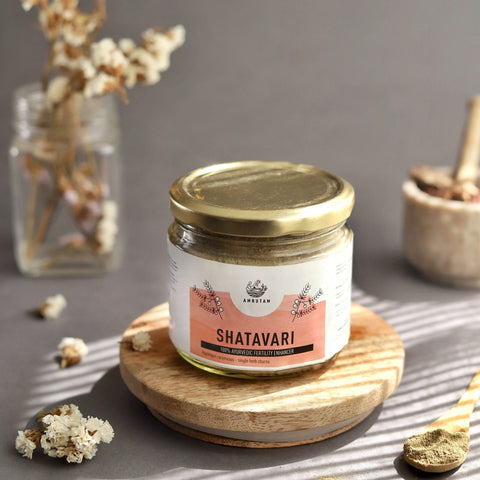
- Shatavari: This revered herb is known as "Stree Rasayan," the essence of women's health. It acts as a uterine tonic, regulating cycles and reducing cramps. Nari Sondarya Malt incorporates Shatavari for its multifaceted benefits.
Embracing Yoga and Pranayama
Simple yoga postures like Child's Pose (Balasana) and Cat-Cow Pose (Marjaryasana-Bitilasana) can ease cramps and improve circulation. Pranayama techniques like alternate nostril breathing (Anuloma-Viloma) promote relaxation and balance the nervous system.

Remember:
Ayurveda is a personalized approach. Consulting an Ayurvedic practitioner can help determine your specific doshic imbalance and recommend a tailored plan for a comfortable and balanced period.
By embracing these practices and the wisdom of Ayurveda, you can find harmony during your monthly cycle and navigate this natural time with grace and ease.