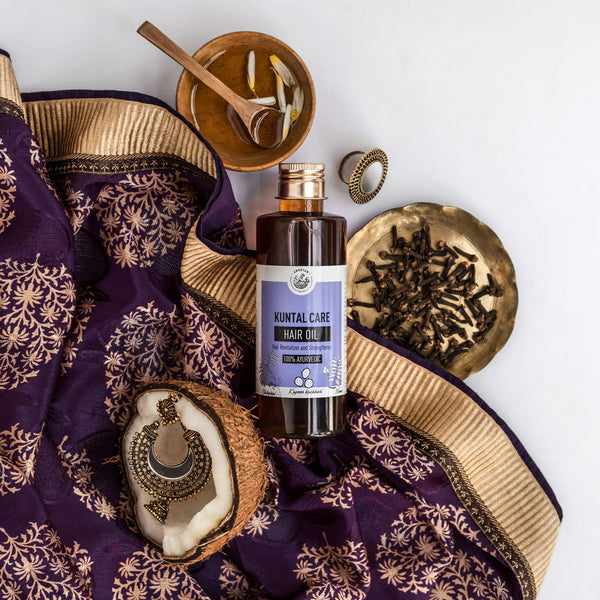
If monsoon seems to bring hair fall along with the rain, you're not alone. Every year, many people notice increased hair shedding during this season. But is it just a coincidence, or is there really a connection between monsoon and hair fall?
According to Ayurveda, there is.

Is Hair Fall During Monsoon Actually Normal?
Before you panic, it's worth knowing that seasonal hair fall is fairly common. Just as your skin reacts to changing weather, your hair and scalp respond to seasonal shifts too. During monsoon, increased humidity, changes in routine, and fluctuations in the body's balance can all affect hair health.
The important question isn't whether a few extra strands are falling. It's whether your hair is getting the nourishment and care it needs during this season.

What Changes During Monsoon?
Monsoon doesn't just change the weather outside, it changes conditions on your scalp too.
1. Your Scalp Becomes More Humid
Humidity can make the scalp feel oilier than usual. Dirt, sweat, and environmental impurities tend to accumulate more easily, creating an uncomfortable environment for healthy hair.

2. Hair Becomes More Fragile
Hair absorbs moisture from the air, making strands swell and become prone to frizz, tangling, and breakage.
3. Your Routine Changes
Less sunlight, irregular sleep, comfort food cravings, and reduced physical activity are all common during monsoon. These lifestyle changes can indirectly influence overall hair health.
The Ayurvedic Perspective: It Starts Much Before Hair
Ayurveda looks at hair differently. Rather than seeing hair fall as just a scalp issue, Ayurveda views hair as a reflection of what's happening inside the body.
During Varsha Ritu (the rainy season), digestive strength or Agni naturally becomes weaker. When digestion is compromised, the body may not efficiently process and distribute nourishment. Over time, this can affect tissues throughout the body, including the hair.
This is why Ayurveda often begins hair care with digestion, diet, and daily routine, not just external applications.
Signs Your Hair Needs Extra Support This Monsoon

Hair doesn't suddenly start falling overnight. Your body often gives small signals first.
You may notice:
-
▪️Hair feeling thinner than usual
-
▪️Increased breakage while combing
-
▪️Excessive frizz
-
▪️Oily roots but dry ends
-
▪️Lack of shine
-
▪️More hair on your pillow or shower floor
These signs may indicate that your hair care routine needs seasonal adjustments.
Monsoon Hair Care: What Ayurveda Recommends
Instead of chasing quick fixes, Ayurveda focuses on consistent care.

Nourish Your Scalp
A healthy scalp creates a healthier environment for hair. Regular scalp massage with nourishing oils can become a grounding self-care ritual while supporting overall scalp wellness.
Explore hair oils.
Don't Ignore Digestion
During monsoon, warm and freshly prepared meals are often preferred over excessively processed, cold, or heavy foods. Supporting digestion supports overall nourishment.
Be Gentle With Wet Hair
Wet hair is more vulnerable to breakage. Avoid aggressive towel drying, tight hairstyles, or vigorous brushing immediately after washing.
Create Consistency
Hair thrives on routine. Whether it's oiling, cleansing, nourishing foods, or proper sleep, consistency often matters more than intensity.
A Monsoon Ritual for Healthier Hair

If you're looking for a simple seasonal routine, consider:
✔ Oiling your scalp once or twice a week
✔ Washing away dirt and humidity buildup regularly
✔ Eating warm, nourishing meals
✔ Staying hydrated
✔ Getting adequate sleep
✔ Managing stress levels
✔ Avoiding harsh chemical treatments during the season
Small habits, repeated consistently, often make the biggest difference.