Hair fall after 40 can reflect Vata dryness. Practical Ayurvedic rituals for scalp massage, warm foods, rest, and herbs support stronger-looking hair.
Read time : 5 min
Hair fall after 40 can reflect Vata dryness. Practical Ayurvedic rituals for scalp massage, warm foods, rest, and herbs support stronger-looking hair.
Read time : 5 min
Hair changes are common as the years pass. More strands in the brush or a different texture after 40 can feel unsettling, yet Ayurveda offers a calmer way to read the change. Rather than treating hair fall after 40 as something to fight, it asks what the body may be asking for: steadier rhythms, more warmth, and better nourishment.
The tradition connects inner balance with outward health, favouring small daily adjustments over harsh fixes. With age, the body's needs can change; hair care can change with them.
Ayurveda describes three doshas, or governing energies: Vata, Pitta, and Kapha. Life after 40 is often considered a Vata stage. Associated with air and space, Vata governs movement, change, and rhythm. Stress, irregular routines, and ageing can all increase its dry, cool qualities.
In Ayurvedic tradition, Vata dosha and hair fall are often discussed together. A Vata-dominant imbalance is traditionally associated with qualities like dryness and irregularity, which Ayurveda connects with changes in hair and scalp care needs. Ayurveda traditionally describes dryness and imbalance as factors that may affect overall nourishment and vitality. This view of ageing and hair health calls for warmth, consistency, and deeper nourishment, not resignation.
An Ayurvedic routine for healthy hair need not be elaborate. A few regular habits can settle Vata and give the scalp and hair more consistent care.

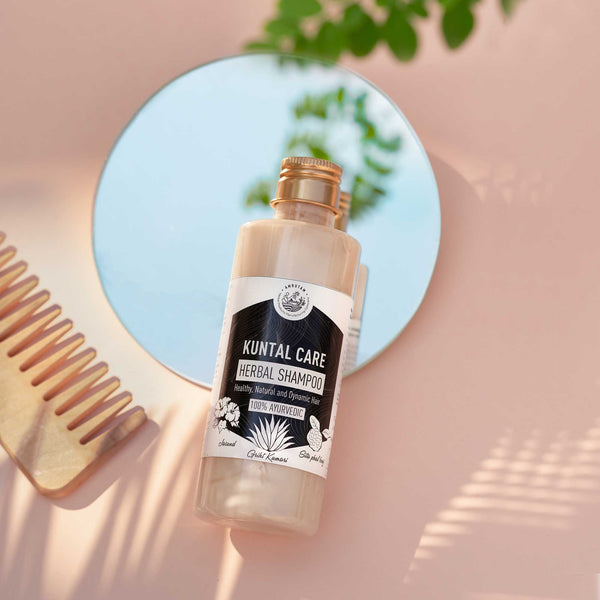
Warm oil massage is a longstanding part of Ayurvedic hair care. Massaging the scalp once or twice weekly is a traditional Ayurvedic practice used to nourish the scalp, support relaxation, and maintain a healthy hair-care routine. It directly addresses Vata's dry quality. Sesame and almond oils are traditional Vata-balancing choices. Read about the benefits of Ayurvedic hair care to see how the ritual fits into wider wellbeing. Follow with a gentle cleanser such as Kuntal Care Herbal Shampoo, which cleans without stripping natural oils.
Hair nourishment Ayurveda style begins at mealtimes. Favour warm, moist, grounding foods: soups, cooked grains, root vegetables, and nourishing fats such as ghee and avocado. Warm water and herbal teas can also ease internal dryness. These choices nourish the whole system, not hair alone.
Chronic stress is one factor that may contribute to changes in hair health. Ayurveda views stress management as an important part of maintaining balance and wellbeing. Make room for what settles you: a few slow breaths, a gentle walk outdoors, or meditation. A regular sleep schedule gives the body time to rest and renew, creating better conditions for healthy hair.
Ayurveda values several herbs for the support they offer hair. Used in oils, masks, or food, they bring focused nourishment to a routine. Three are especially associated with Ayurveda for hair growth and strength:
▪ Bhringraj: Traditionally valued in Ayurveda, Bhringraj is commonly used in hair-care preparations to support scalp nourishment and maintain hair strength.
▪ Amla: Traditionally used in Ayurveda, Amla is valued for its nourishing properties and is commonly included in hair-care preparations.
▪ Brahmi: Valued in Ayurveda for its calming properties, Brahmi is traditionally included in wellness and hair-care preparations.
Herb-based products such as Amrutam's Hair Fall Control Kit offer a practical way to bring these ingredients into a routine. For more on Vata, see the Ayurvedic Dosha Guide e-book.

Ayurveda aims to address imbalance and support the body's natural vitality. Diet, daily routine, and scalp care practices that support balance may help maintain overall hair and scalp wellbeing.
For a dry, Vata-type scalp, try a warm oil massage once or twice a week. If the scalp feels especially dry, more frequent oiling may suit you. A regular practice matters more than a rigid schedule.
Begin with weekly warm oil massage, a gentle herbal shampoo, warm cooked meals, and regular sleep. Together, these habits help manage Vata while supporting hair and scalp care.
Yes. Ayurveda sees stress as a strong driver of Vata, which can bring dryness and constriction that affect follicle nourishment. Meditation, gentle yoga, and other calming practices are therefore part of hair care.
Gentle cleansing protects natural oils, while nourishing food and stress care support the scalp from within. Treat the scalp as the soil for your hair: it needs regular attention to flourish. Read how to stop hair fall with Ayurveda for further tips.

Hair care during Navratri made simple: prep, sweat-proof Garba styles, gentle cleansing, and post-festival repair for soft, healthy, shiny hair after Garba.

Skin care after Garba nights made simple: remove makeup, cleanse, soothe with aloe vera, and moisturize for calmer, fresher skin by morning.

Skin and hair care after Garba can be simple: remove makeup, soothe sweaty skin, detangle gently, and decide when your scalp needs a wash after dancing.

Should you shampoo after sweating? Use your scalp's oil, stickiness, and comfort to decide when to wash, rinse, or gently air dry after exercise.

Remove makeup without drying out your skin with a gentle oil cleanse, mild face wash, and moisturizer for a soft, comfortable finish after a full day of makeup.

Double cleansing is not for every night. Use this simple check to decide when sunscreen, makeup, or sweat calls for one cleanse or two.

Irritated skin after jewellery and makeup needs less, not more: remove triggers, cleanse gently, moisturize, and know when to get medical care for a calm recovery.

Festive hair care for busy wedding and party weeks: protect hair from heat, refresh styles between events, and restore softness after.
Imbalances are unique to each person and require customised treatment plans to curb the issue from the root cause fully. Book your consultation - download our app now!