Menopause hair thinning often follows hormonal change. See how Vata-focused scalp care, warm foods, and daily routines support healthier-looking hair.
Read time : 6 min
Menopause hair thinning often follows hormonal change. See how Vata-focused scalp care, warm foods, and daily routines support healthier-looking hair.
Read time : 6 min
More hair in the brush or a ponytail that suddenly feels smaller can be disconcerting. For many women, these changes arrive with menopause, the transition that ends menstrual cycles. Hormonal shifts can affect mood, hair texture, and density; menopause hair thinning is often associated with falling estrogen levels.
Medicine looks first at hormones and genetics. Ayurveda offers a complementary lens, describing this time as a more Vata-dominant stage of life, when dryness and lightness can become more noticeable. Both views point toward practical care: nourishment, attentive scalp care, and steady daily rhythms.
Hormonal change is a central reason hair thins during menopause:
▪️ The Role of Estrogen: Estrogen appears to influence the hair-growth cycle, and hormonal changes around menopause may contribute to increased shedding, finer hair, or reduced density.
▪️ Hormonal Balance: Changes in the balance of estrogen and androgens may also influence susceptible hair follicles. In female pattern hair loss, affected follicles can gradually become smaller, producing finer strands.
▪️ Other Contributing Factors: Hormones are not the only influence. Genetics, stress, nutrition, and general health matter too. A study in Menopause found that over half of postmenopausal women experience some degree of female pattern hair loss.
The pattern is usually diffuse thinning across the scalp, rather than clear bald patches. A wider part or less volume may be the first sign. Sudden, severe, or patchy loss deserves a conversation with a healthcare professional, who can rule out other causes.
Ayurveda describes life in stages associated with the doshas, or governing energies. Childhood is linked with Kapha (earth and water), adulthood with Pitta (fire and water), and the years after roughly age 50 with Vata. Menopause marks the transition into this Vata-dominant period.
Vata combines air and ether and is described as dry, light, cold, rough, and mobile. As it rises, those qualities can show up more strongly in the body. For hair, Ayurveda associates an unsettled Vata with:
▪️ Brittleness and breakage
▪️ A sense of lightness or thinning
▪️ Hair that may feel less dense or more prone to breakage
Ayurvedic care aims to offset Vata's dry, light qualities with warmth, moisture, and grounding routines. That can mean regular meals, warm oils, and deliberate hair nourishment. For a closer look at your constitution, the Ayurvedic Dosha Guide E-book is a useful reference.

Small, repeatable habits can make this transition feel more supported. In Ayurvedic terms, consistency, warmth, and nourishment help settle Vata.
A well-cared-for scalp supports healthy-looking hair after menopause. Ayurveda has long used regular warm oil massage, or Abhyanga, to nourish the scalp. Gentle massage can help distribute oil across a dry scalp and can also make the ritual feel calming.
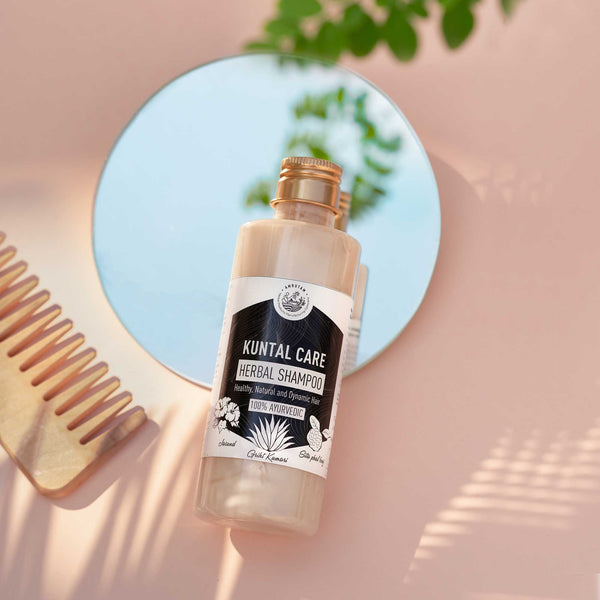
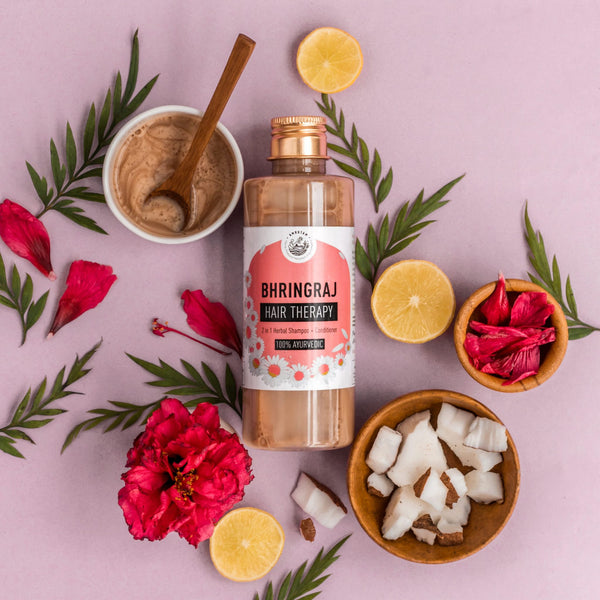
A weekly hair spa can add a deeper-conditioning step. The Amrutam Kuntal Care Do-It-Yourself Hair Spa is made for this purpose. Traditional Ayurvedic hair care also uses Bhringraj, often called the "king of hair," and antioxidant-rich Amla.For a topical approach, Amrutam Bhringraj Hair Oil can be gently massaged into the scalp and hair before washing.
Food supplies the nutrients hair needs. To balance Vata, favor warm, cooked, moist meals: soups, stews, and well-spiced grains are natural choices. Healthy fats also address internal dryness, so include ghee, olive oil, avocado, and nuts where they suit your diet.
A regular Dinacharya, or daily routine, is a classic Ayurvedic way to calm Vata. Keep meals, sleep, and waking hours reasonably consistent. That predictability can feel stabilizing when Vata's mobile quality is pronounced. Walking, yoga, meditation, deep breathing, and adequate rest round out a grounded menopause-support routine.

Menopause-related thinning is often tied to hormonal shifts and aging. Some change in density can last, but thoughtful hair care, stress support, and adequate nutrition can help you maintain hair health. A dermatologist can offer individualized treatment options.
Ayurveda emphasizes steady nourishment: warm oil scalp massage, herbs such as Bhringraj and Amla, a Vata-pacifying diet, and a consistent routine. The benefits of Ayurvedic hair care offer more ideas.
Ayurveda considers menopause a Vata-dominant stage. Excess Vata is associated with dryness of the skin and hair, anxiety, disrupted sleep, and joint stiffness. Warmth, regularity, and nourishing food are traditional ways to balance it. You can Learn about Vata Dosha imbalances.
High or prolonged stress can contribute to increased hair shedding in some people. Meditation, deep breathing, and adequate sleep are practical parts of menopause self-care.
Gradual thinning is common, but see a doctor or dermatologist for sudden, rapid, or patchy loss, or if thinning causes significant distress. They can identify possible causes and discuss appropriate medical treatment.

Hair care during Navratri made simple: prep, sweat-proof Garba styles, gentle cleansing, and post-festival repair for soft, healthy, shiny hair after Garba.

Skin care after Garba nights made simple: remove makeup, cleanse, soothe with aloe vera, and moisturize for calmer, fresher skin by morning.

Skin and hair care after Garba can be simple: remove makeup, soothe sweaty skin, detangle gently, and decide when your scalp needs a wash after dancing.

Should you shampoo after sweating? Use your scalp's oil, stickiness, and comfort to decide when to wash, rinse, or gently air dry after exercise.

Remove makeup without drying out your skin with a gentle oil cleanse, mild face wash, and moisturizer for a soft, comfortable finish after a full day of makeup.

Double cleansing is not for every night. Use this simple check to decide when sunscreen, makeup, or sweat calls for one cleanse or two.

Irritated skin after jewellery and makeup needs less, not more: remove triggers, cleanse gently, moisturize, and know when to get medical care for a calm recovery.

Festive hair care for busy wedding and party weeks: protect hair from heat, refresh styles between events, and restore softness after.
Imbalances are unique to each person and require customised treatment plans to curb the issue from the root cause fully. Book your consultation - download our app now!